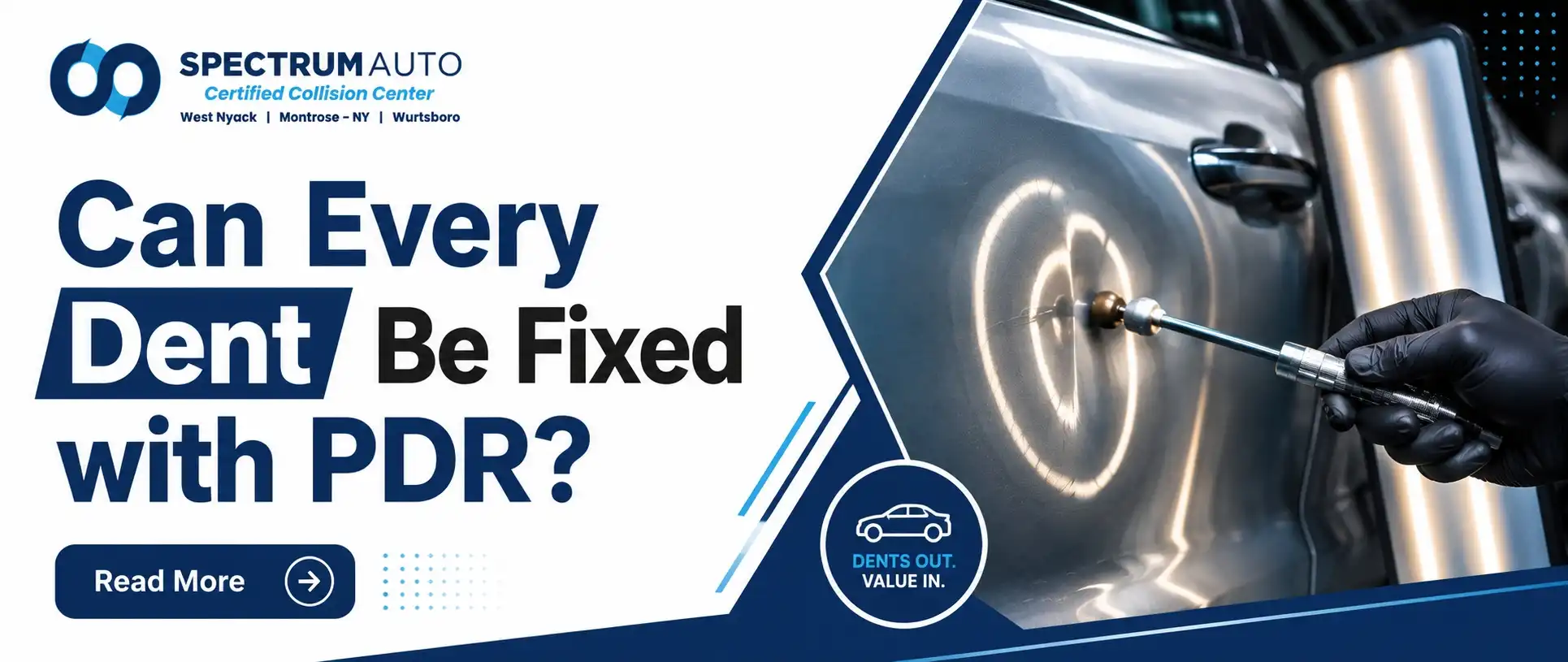
Dents are one of the most common types of vehicle damage. From shopping cart bumps to hail damage and minor parking lot accidents, dents can happen almost anywhere. Many car owners today prefer Paintless Dent Repair (PDR) because it is faster, more affordable, and helps preserve the original factory paint.
However, not every dent can be repaired using PDR. While this repair method works well in many situations, certain types of damage may require traditional body repair instead.
So how do technicians decide whether a dent qualifies for PDR?
In this blog, we will explain what Paintless Dent Repair is, how it works, and the three main factors professionals examine before recommending PDR for your vehicle.
What Is Paintless Dent Repair (PDR)?
Paintless Dent Repair is a repair method used to remove dents without sanding, fillers, or repainting the damaged area.
Specialized tools are used to gently push or pull the dented metal back into its original shape while keeping the factory paint intact.
PDR is commonly used for:
- Minor dents
- Door dings
- Hail damage
- Small body creases
- Parking lot damage
Because the original paint remains untouched, the repair process is usually faster and more cost-effective than traditional auto body repairs.
Why Many Vehicle Owners Prefer PDR
Paintless Dent Repair offers several advantages when the damage qualifies for the process.
Benefits of PDR Include:
- Preserves original factory paint
- Faster repair times
- Lower repair costs
- No fillers or repainting
- Helps maintain vehicle value
- Eco-friendly repair process
However, successful results depend on the type and severity of the damage.
The 3 Main Factors Technicians Look For Before Recommending PDR
Not every dent can be repaired with Paintless Dent Repair. Experienced technicians carefully inspect the vehicle before deciding on the best repair method.
Here are the three most important factors professionals evaluate.
1. The Condition of the Paint
One of the most important requirements for PDR is that the vehicle’s paint must still be in good condition.
PDR Works Best When:
- The paint is not cracked
- There are no deep scratches
- The finish remains intact
- No paint chipping is present
Since PDR reshapes the metal without repainting, damaged paint can limit the effectiveness of the repair.
When Paint Damage Prevents PDR
Traditional repair methods may be needed if:
- Paint is peeling
- Clear coat is damaged
- Metal is exposed
- Rust has started forming
In these cases, sanding, fillers, and repainting may be necessary to restore the surface properly.
2. The Size and Depth of the Dent
The size and depth of the dent are major factors in determining whether PDR is possible.
Small to Medium Dents Are Ideal
PDR works very well for:
- Small round dents
- Minor creases
- Shallow hail damage
- Door dings
These dents can often be repaired without affecting the original paint.
Deep or Sharp Dents Are More Difficult
Some dents stretch the metal too much, making PDR less effective.
Technicians may recommend traditional repairs if the dent:
- Has sharp edges
- Is deeply creased
- Has stretched the metal
- Covers a large area
The deeper the dent, the harder it becomes to fully restore the panel using PDR alone.
3. The Location of the Dent
Where the dent is located also plays an important role in the repair process.
Easy-to-Reach Areas Work Best
PDR technicians need access behind the damaged panel to carefully reshape the metal.
Common repairable areas include:
- Doors
- Fenders
- Hoods
- Roof panels
Difficult Locations May Limit PDR
Some areas are harder to access because of:
- Reinforcement bars
- Tight panel spaces
- Structural supports
- Double-layer metal sections
Dents near panel edges are often more difficult because the metal becomes stronger and less flexible near those areas.
Additional Factors Technicians Consider
Besides the three main factors, professionals also inspect other details before approving PDR.
Type of Metal
Aluminum panels behave differently than steel panels and may require special techniques.
Age of the Damage
Older dents may become harder to repair if moisture or rust has developed.
Previous Repairs
Panels that have been repainted or repaired before may not respond well to PDR techniques.
Common Situations Where PDR Works Well
Paintless Dent Repair is highly effective for many everyday types of damage.
Typical PDR-Friendly Damage Includes:
- Hail damage
- Parking lot dents
- Minor bumper impacts
- Shopping cart damage
- Small collision dents
- Light body creases
These repairs can often be completed quickly without replacing parts or repainting panels.
Situations Where Traditional Repairs May Be Better
PDR is not always the safest or most effective option.
Traditional body repair may be necessary if:
- Paint is damaged
- The panel is torn
- The metal is severely stretched
- Structural damage is present
- The dent affects panel alignment
A professional inspection helps determine the best repair approach for both appearance and safety.
Why Professional Inspection Is Important
Many dents may look simple from the outside but can involve hidden damage underneath.
Professional technicians use:
- Specialized lighting
- Reflection boards
- Dent measuring tools
- Panel inspection techniques
These tools help determine whether PDR can restore the panel correctly.
If you are searching for trusted services related to Paintless Dent Repair NY, choosing an experienced repair shop with trained PDR technicians is extremely important.
Benefits of Repairing Dents Quickly
Some drivers postpone dent repairs because the damage seems minor. However, waiting too long can create additional problems.
Delayed Repairs Can Lead To:
- Paint deterioration
- Rust formation
- Reduced resale value
- Further panel damage
- Moisture buildup
Early repairs help preserve both the appearance and condition of the vehicle.
How Long Does Paintless Dent Repair Take?
One major advantage of PDR is the shorter repair time compared to traditional bodywork.
Minor Repairs May Take:
- A few hours
Moderate Damage May Take:
- One to two days
Repair time depends on:
- Number of dents
- Dent size
- Location
- Accessibility
Because there is no repainting involved, the repair process is often much faster.
Why Vehicle Owners Choose PDR Over Traditional Repairs
Many drivers prefer PDR because it preserves the factory finish.
PDR Helps:
- Maintain original paint quality
- Avoid color matching issues
- Reduce repair costs
- Protect resale value
Vehicles with original factory paint often maintain better market value compared to repainted panels.
Choosing the Right PDR Repair Shop
Not every repair shop specializes in Paintless Dent Repair.
When selecting a repair facility, look for:
- Experienced PDR technicians
- Modern dent repair tools
- Positive customer reviews
- Insurance claim assistance
- Knowledge of aluminum and steel repairs
- Quality inspection process
A skilled technician can determine whether PDR is the right solution for your vehicle.
If you need reliable Paintless Dent Repair in NY services, professional evaluation is the best way to protect your vehicle and avoid unnecessary repairs.
Conclusion
Paintless Dent Repair is an excellent solution for many types of minor vehicle dents, but not every dent qualifies for the process. The condition of the paint, the size and depth of the dent, and the location of the damage are the three main factors technicians examine before recommending PDR.
Professional inspection helps determine whether PDR can restore the panel properly while maintaining the original factory finish.
If you are looking for trusted dent repair services, Spectrum Auto Inc. provides professional collision repair and Paintless Dent Repair services using experienced technicians and modern repair equipment. Their team focuses on quality workmanship, accurate repairs, and customer satisfaction to help restore your vehicle’s appearance safely and efficiently.
Frequently Asked Questions
1. Can every dent be repaired using Paintless Dent Repair?
No. Some dents are too deep, located in difficult areas, or involve paint damage that requires traditional body repair.
2. Does PDR damage the original paint?
No. PDR is designed to restore the dent while preserving the original factory paint when the paint surface is undamaged.
3. How long does Paintless Dent Repair take?
Minor dents can often be repaired within a few hours, while larger repairs may take one or two days.
4. Is Paintless Dent Repair cheaper than traditional repairs?
In many cases, yes. PDR usually costs less because it does not require sanding, fillers, or repainting.
5. Can old dents still be repaired with PDR?
Sometimes. Older dents may still qualify if the paint is intact and the metal has not been severely stretched or damaged.