Leasing a car feels like a smart financial move. You drive a newer vehicle, keep payments manageable, and hand it back after a few years. Simple enough. But many New York drivers walk into the dealership on turn-in day completely unprepared for what comes next — a damage assessment bill that stings far more than any dent repair ever would have.
If your lease is ending soon, this guide will help you avoid that mistake.
The Hidden Cost Trap at Lease Turn-In
Most people know that leasing means you don't own the vehicle. What they don't think through is what "returning it in good condition" actually costs when the leasing company decides what that means.
When you return a leased car, the dealership runs a detailed inspection. Inspectors note every dent, ding, scratch, and paint chip. Unlike a collision repair shop that competes for your business and offers fair market pricing, the leasing company sets its own rates. Their rates run 30% to 50% higher than what a certified shop would charge you.
Here's the reality in plain numbers:
- A door ding that costs $200 to fix at a body shop may cost you $500 at turn-in
- A bumper scuff that runs $300 at a shop can land at $600 on your final bill
- Multiple small damages add up fast — easily crossing $1,500 to $2,000 in charges
That math should push every lessee to take action before the keys change hands.
What Counts as "Normal Wear and Tear" in New York?
This is the question every lessee asks. The answer varies by leasing company, but most follow similar standards.
What typically passes inspection:
- Dents smaller than about half an inch with no paint damage
- Light surface scratches that haven't broken through the clear coat
- Tire wear that falls within acceptable tread depth limits
What almost always gets flagged:
- Dents with sharp creases or stretched metal
- Paint chipped down to bare metal or primer
- Scratches longer than a couple of inches
- Damage near body panel edges or door seams
- Any visible evidence of a fender bender
New York roads don't do lessees any favors. Tight parking garages, aggressive city traffic, potholes, and parallel parking situations create a steady drip of cosmetic damage across a 2 or 3-year lease term. By turn-in day, most drivers are looking at 4 to 6 problem areas they never addressed.
Why Fix Dents Yourself Before Turn-In?
The core reason is control. When you choose your own collision repair center, you control the timing, the cost, and the quality. You get multiple estimates. You pick a shop you trust. You decide what gets fixed.
Leave it to the leasing company, and you get one number. Theirs.
There's also a practical inspection angle worth knowing. Dealers recognize professional repair work. A car that shows up clean and properly fixed moves through inspection quickly and without fuss. A car with obvious deferred damage invites closer scrutiny across the whole vehicle — and that's when small things you hadn't noticed start getting flagged too.
Types of Damage Worth Addressing Before Return
Not every nick needs attention. Some minor wear is expected. But these categories almost always generate charges:
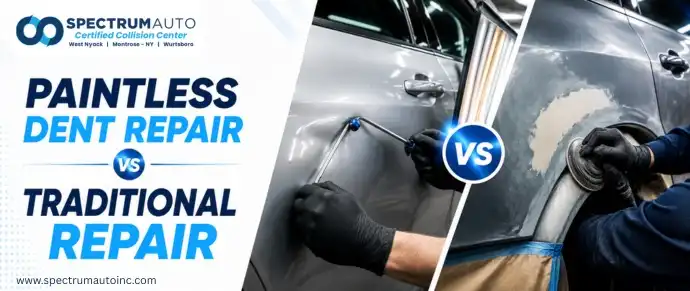
Door dings and parking lot dents These rank as the most common lease-end issue. Many don't require any paintwork at all. Paintless dent repair handles most of them quickly and at a low cost.
Bumper scuffs and cracks City driving punishes bumpers. A scuffed or cracked bumper is one of the first things inspectors flag. Bumper repair is typically affordable at a body shop and almost always worth doing.
Panel scratches with paint damage Run your fingernail across the scratch. If you can feel it catch, and you can see primer or bare metal, that scratch needs paint work before return.
Wheel and rim damage Curb rash is everywhere in New York. Inspectors charge for it regularly. A certified shop can refinish rims at a fraction of what the leasing company will bill.
Windshield chips A small chip that has spread into a crack will almost certainly result in a full windshield replacement charge. Chip repair costs very little. Replacement does not.
Timing: When to Get Repairs Done
Give yourself 4 to 6 weeks before your lease end date. That window gives you room to:
- Book an inspection at a certified collision repair shop
- Get an estimate without feeling rushed
- Schedule the actual work at your convenience
- Allow time for any follow-up or touch-ups
Don't wait until the final week. Rushed repairs cut corners. Paint and body work need time to cure and settle properly before an inspector looks at them.
One more useful step: many leasing companies offer a pre-inspection a few months before the lease ends. Use it. It tells you exactly what they'll charge and helps you decide what's worth fixing and what isn't.
Choosing the Right Shop
Price alone shouldn't drive this decision. The repair needs to hold up under a professional inspection. A poorly matched paint job or a dent that wasn't fully worked out will get noticed.
Look for these two credentials when choosing a shop:
- OEM certification means the shop trains and operates to manufacturer's standards. Technicians use the correct materials and techniques for your specific vehicle.
- I-CAR Gold Class designation signals that the shop invests in continuous training and meets recognized industry standards for quality.
A quality repair blends in. Paint matches. Panel gaps sit right. The inspector looks at a well-maintained vehicle, not a patchwork one.
A Note on Lease Protection Plans
Some lessees buy lease-end protection or gap coverage, assuming it handles cosmetic damage. It usually doesn't. These products cover total loss scenarios and certain mechanical situations. Cosmetic wear and damage charges at turn-in get excluded almost every time.
Don't rely on a protection plan to absorb your dent bill. Get the car assessed at a qualified collision repair center ahead of time instead.
What to Expect on Turn-In Day
An inspector walks around the vehicle with a checklist. They measure dents, examine paint under inspection lighting, check glass, review tires, and look at the interior. You sign off on the condition report at the end.
If you've handled repairs ahead of time, this process is far less stressful. You already know the car's condition. If an inspector flags something unexpected, you can address it calmly with documentation in hand.
Keep all repair receipts from your body shop. Written proof that damage was professionally repaired gives you a strong position if a leasing company tries to charge for something you already fixed.
Your Trusted Partner for Lease-End Repairs: Spectrum Auto Inc.
Spectrum Auto Inc. has served New York drivers for over 30 years, with locations in West Nyack, Cortlandt, and Wurtsboro. The team holds OEM certifications, I-CAR Gold Class and Platinum designations, and Tesla-approved status. Every technician trains to manufacturer standards and delivers repairs that hold up under professional inspection.
From paintless dent repair and color-matched paint work to bumper repair and full pre-return assessments, Spectrum Auto handles exactly the kind of work lease drivers need before turn-in. They work with all major insurance carriers and offer online estimates so you can plan ahead without the guesswork.
Frequently Asked Questions (FAQs)
- How far in advance should I fix dents before my lease ends?
Aim for 4 to 6 weeks before your scheduled turn-in date. That window gives you time to get a proper estimate, complete the work without rushing, and handle any follow-up needed. Waiting until the final week creates unnecessary stress and increases the chance of a rushed job.
- Will car insurance cover cosmetic dent repairs before lease turn-in?
It depends on your policy and how the damage happened. Collision coverage may apply if an accident caused the damage. But factor in your deductible and the risk of a rate increase first. For minor dents, paying out of pocket at a body shop often makes more financial sense.
- What is paintless dent repair, and when does it work?
Paintless dent repair uses specialized tools to push dents out from behind the panel without any repainting. It works best on smaller dings where the paint hasn't cracked or chipped. It's faster, less expensive, and leaves no visible trace of the original damage.