A fender-bender leaves you with a confusing choice. Do you pick a standard body shop, or one with OEM certification? The right answer depends on what actually got damaged.
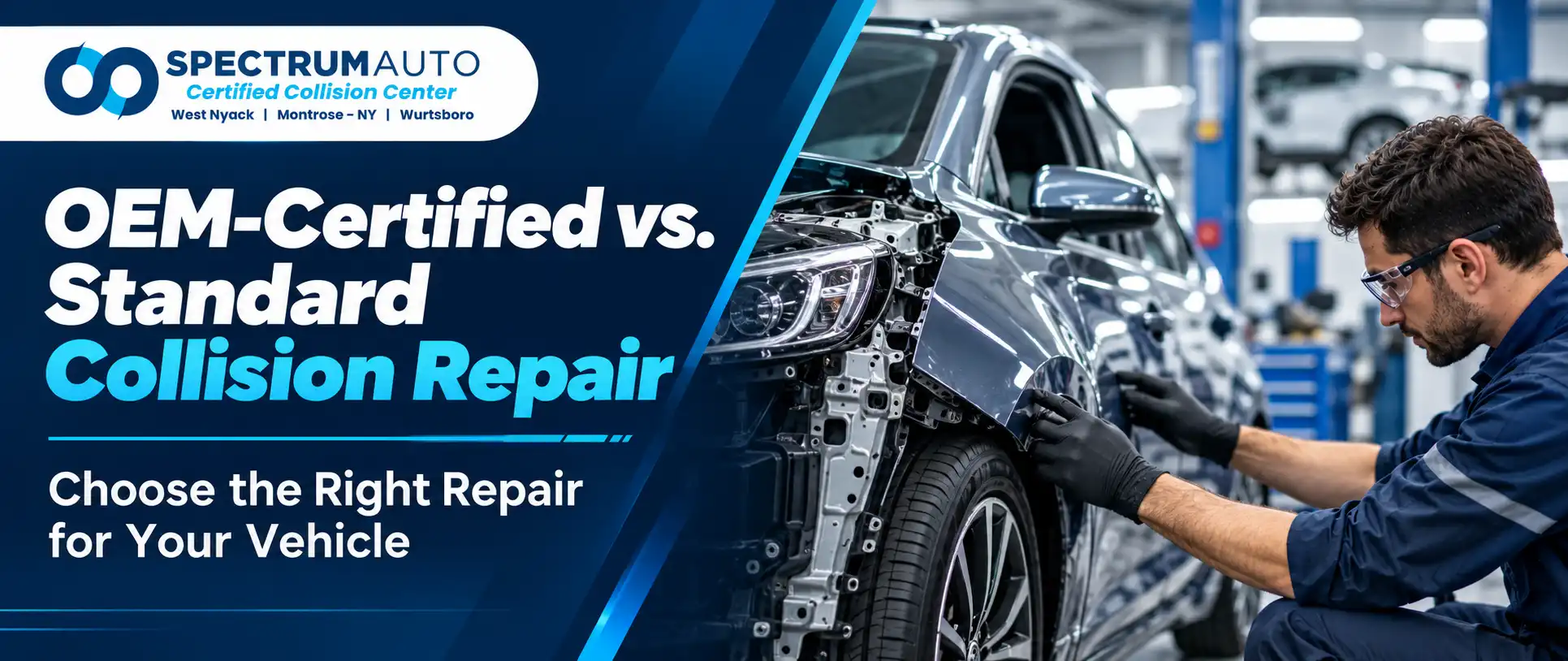
This guide breaks down OEM-Certified vs. Standard Collision Repair in plain terms. You'll see what each option includes, and when each one fits your situation. We'll also cover what a certified collision center in Rockland county actually has to prove to earn that label.
What OEM certification actually requires from a shop
OEM certification isn't a logo a shop can just add to its website. A manufacturer audits the shop first. The shop has to pass before it earns anything.
Auditors typically watch technicians work in person, more than once, before granting certification. After that, random quarterly audits keep the shop honest. Equipment has to match the manufacturer's specifications, not just any brand's tools.
Technician training has to trace back to I-CAR or a similar body. That's true even when the tech on the floor isn't individually credentialed. That training chain gets documented and checked. Certification usually splits into tiers too: structural, cosmetic, aluminium structural, and aluminium cosmetic.
"Fewer than 5,000 of the nation's roughly 35,000 collision repair shops have the right equipment and training. That's enough to reliably restore pre-loss condition on today's vehicles." — NSF International estimate, via Repairer Driven News
That estimate is a decade old, but the underlying math hasn't improved much. Vehicles have only added more sensors, aluminium panels, and high-strength steel since then. A real OEM-certified collision centre has to keep up with all of it.
What a standard, non-certified shop can and can't do
A standard shop skips the manufacturer audit entirely. That doesn't make it a bad shop. Plenty of standard shops do excellent cosmetic work every day.
Where it gets risky is structural work. Roughly a third of collisions are invasive enough to affect crashworthiness if the repair goes wrong. A standard shop may not document its procedures the same way a certified one does.
Equipment flexibility is the trade-off. A standard shop can choose its own tools and suppliers. That often means lower overhead, which can translate into a lower bill for simple repairs.
OEM-Certified vs. Standard Collision Repair: the real differences
Parts sourcing is the first real split. A certified shop generally prioritizes genuine OEM parts on structural repairs. A standard shop often reaches for aftermarket parts first, especially for cosmetic panels.
Aftermarket parts aren't automatically unsafe. CAPA has certified more than 128 million aftermarket parts since 1990. Its 14 separate standards cover everything from fenders to sensors. Its testing checks that a part matches the fit, finish, and performance of the original.
Documentation is the second split. A certified shop logs its procedures against the manufacturer's own repair guidelines. A standard shop may follow similar steps without the paper trail an insurer or future buyer might want.
Calibration is the third split, and it's growing every year. Cameras and sensors behind your bumper need precise recalibration after many repairs. A certified collision centre typically has the specific tooling a given brand requires.
How sensors and driver-assist features raise the stakes
Most cars built in the last several years carry forward-facing cameras and radar sensors. These power lane-keep assist, adaptive cruise control, and automatic braking. A bumper repair can knock these systems out of alignment without any visible sign.
Recalibration comes in two forms. Static calibration happens in the shop, using targets and a level floor. Dynamic calibration happens on the road, at a specific speed, with a scan tool running.
Both methods need equipment most standard shops don't keep on hand. A certified collision center typically owns the brand-specific tooling or has a documented relationship with a calibration specialist. Ask which one applies to your car before you approve the repair.
Skipping recalibration isn't just a paperwork gap. A misaligned camera can misjudge distance or miss a pedestrian step-out. That risk alone pushes many newer-vehicle repairs toward a certified shop, even when the visible damage looks minor.
Why parts sourcing matters more than most drivers realize
A bumper cover is one thing. A structural rail, a battery enclosure, or a sensor mount is another. Fit tolerances on structural parts affect how your car behaves in a second collision.
CAPA's standards cover a wide range, from metal panels to exterior cameras and parking sensors. That's a meaningful quality bar for cosmetic and electronic components. It doesn't replace a manufacturer's own crash-test validation for structural parts, though.
Ask your shop directly which parts it plans to use before work starts. A written estimate should specify OEM, CAPA-certified aftermarket, or another aftermarket source. That one question tells you a lot about how the shop operates.
When a standard shop is a perfectly reasonable choice
Cosmetic-only damage is the clearest case. A scuffed bumper, a dented fender, or chipped paint rarely touches anything structural. A skilled standard shop can usually match colour and finish well.
Budget flexibility matters too. Aftermarket parts and lower overhead can bring the bill down on simple jobs. If your vehicle is older and carries no manufacturer warranty concerns, that trade-off often makes sense.
When OEM certification is the safer call
Structural damage changes the calculation. Frame rails, crumple zones, and battery housings need manufacturer-specific repair procedures. Getting this wrong can affect how your car protects you in a future crash.
Newer vehicles bring their own case for certification. Advanced driver-assist sensors need precise recalibration after many repairs. A shop without the right tooling can return your car with cameras that are technically back on, but misaligned.
Vehicles still under a manufacturer's new-car warranty raise one more consideration. Some warranty terms reference approved repair procedures. A certified collision centre documents its work in a way that supports that history.
Driving a damaged car to a collision centre in Rockland county
A driver heading home on the Palisades Parkway after a fender-bender faces a real decision fast. If the damage looks structural, towing beats driving, even for a short distance. A damaged frame or battery housing rarely improves with extra miles on it.
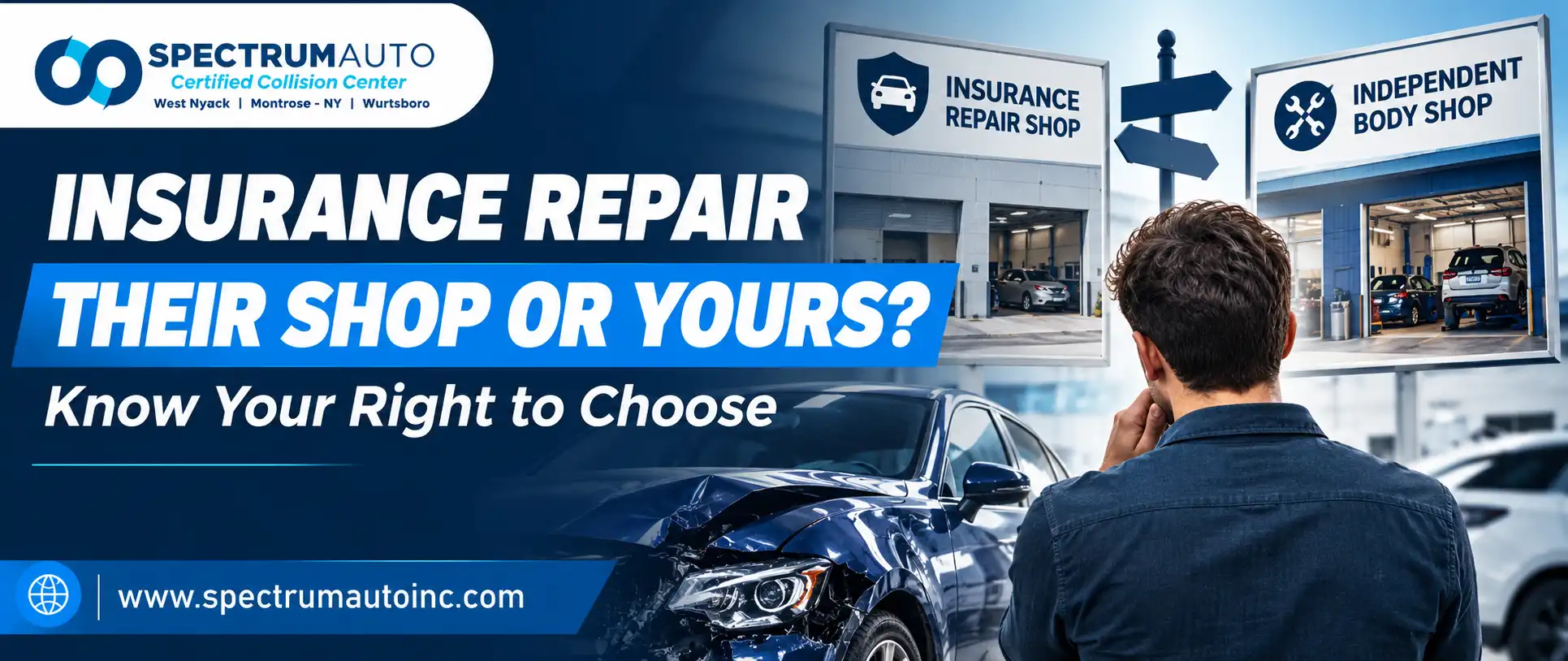
New York law also gives you a say in where that repair happens. Your insurer can't require a specific shop for most claims. You can choose a certified collision center in Rockland county yourself. There's no need to default to whichever shop your insurer suggests first.
Confirm your specific policy terms with your insurer regardless. Direct repair program relationships can simplify billing, but they don't override your right to choose.
What to ask before you choose a shop
A few direct questions separate a confident shop from a guessing one. Ask each one before you commit to a repair.
- Which certification tier does the shop hold: structural, cosmetic, or both?
- Will the repair use genuine OEM parts, CAPA-certified aftermarket parts, or another source?
- Does the shop recalibrate cameras and sensors in-house, or send that out?
- Can the shop show documentation tracing its training back to I-CAR or a similar body?
- What does the written warranty actually cover, and for how long?
A shop that answers clearly, without hesitation, is usually the safer bet. Hesitation on any of these questions is worth noticing.
Ask about the estimate's structure too. A written estimate should break out parts, labour, and recalibration as separate line items. A vague lump-sum number makes it harder to compare one shop against another.
Get the answers in writing when you can. A verbal promise about parts or warranty terms is harder to enforce later than a line on your invoice.
What OEM-certified collision repair costs
Spectrum Auto Inc. operates its certified facility at 175 NY-303 in West Nyack, inside Rockland County. The team holds I-CAR Gold Class status, and its technicians carry I-CAR Platinum credentials. It lists more than 15 OEM and Tesla certifications across its network.
No shop can quote an exact price over the phone. Hidden damage behind a bumper or sensor housing often changes the scope once teardown starts. Treat any phone estimate as a starting point, not a final number.
Spectrum Auto backs completed repairs with a written warranty covering workmanship. It also coordinates directly with major insurers, including Allstate, State Farm, Travelers, and GEICO, among others.
If you're searching for a collision center in Rockland county, ask about its specific OEM relationships first. A shop with documented ties to your car's manufacturer typically handles recalibration and structural work with less guesswork.
Loaner or rental availability is worth asking about too, especially for a longer structural repair. A certified shop handling a recalibration-heavy job may need your car for several extra days. Planning around that upfront beats finding out mid-repair.
Final thoughts: choosing between OEM-certified and standard repair
Most cosmetic damage doesn't need OEM certification to come out looking right. Structural damage, newer sensors, and warranty concerns tip the scale the other way. Match the shop to the actual damage, not just habit or convenience.
When you're not sure which category your repair falls into, ask for an inspection first. A certified shop can usually tell you within minutes whether the damage is cosmetic or structural.
Frequently asked questions
Q: Is OEM-certified collision repair always more expensive than a standard shop?
Often, yes, mainly due to genuine parts and specialized equipment. The gap narrows on purely cosmetic work. For structural repairs, the added documentation and calibration can be worth the difference.
Q: Can a standard shop still use genuine OEM parts?
Yes, many standard shops order OEM parts on request. What they typically lack is the manufacturer's audited training and documentation chain. That distinction matters most on structural and safety-related repairs.
Q: Does my insurance company get to pick which shop repairs my car?
No. New York law lets you choose your own repair shop for most claims. Your insurer can recommend a shop only if you ask for a recommendation yourself.
Q: How do I know if my accident caused structural damage?
You often can't tell from the outside. A bent frame rail or damaged battery housing can hide behind an intact bumper. A certified shop's initial inspection is the fastest way to find out.
Q: Will my car's safety features still work the same after a standard repair?
They should, as long as recalibration happens correctly. The risk isn't the repair itself. The risk is skipping recalibration, or using equipment that isn't precise enough for your specific sensors.
Not sure whether your repair calls for OEM-Certified vs. Standard Collision Repair? Spectrum Auto Inc. can inspect your vehicle and walk you through the OEM-Certified vs. Standard Collision Repair decision honestly. Request a free estimate today.