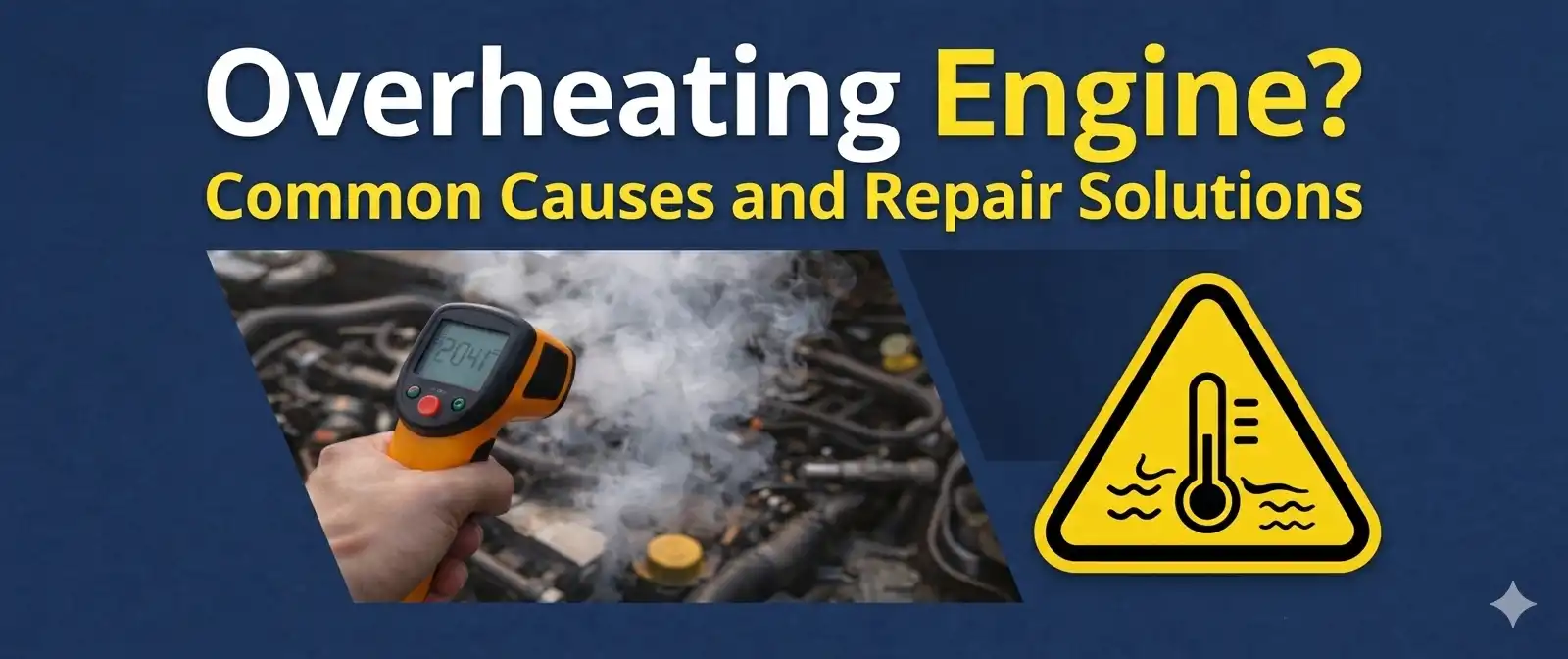
That temperature gauge climbing toward the red is one of the most alarming things a driver can see. An overheating engine isn't just an inconvenience. Ignore it long enough, and you risk serious, sometimes permanent damage. The cooling system is a finely balanced network. When even one part fails, temperatures spike fast.
Here's what's actually going on under the hood, and what fixing it looks like.
Why Do Engines Overheat?
Most overheating issues trace back to a disruption in the cooling system. The causes range from simple maintenance oversights to mechanical failures that need immediate attention.
- Low or Leaking Coolant: Coolant absorbs heat from the engine and carries it away. A slow leak from a worn hose, a cracked radiator, or a failing gasket drains levels gradually. You may not notice anything unusual until the engine is already running dangerously hot.
- Stuck Thermostat: When the thermostat sticks in the closed position, coolant stops circulating. Heat builds up with nowhere to go. It's a small part, but it can cause a lot of damage quickly.
- Radiator Issues: Clogged or damaged radiators can't dissipate heat properly. Road debris, rust, and mineral deposits build up over time. Eventually, they restrict coolant flow through the radiator fins.
- Water Pump Failure: The water pump keeps coolant moving through the system. A worn impeller or a damaged seal causes coolant to stagnate. Stagnant coolant does nothing to cool a running engine.
- Blown Head Gasket: This is the worst-case scenario. A blown head gasket lets combustion gases mix with coolant or pushes coolant into the cylinders. Watch for white exhaust smoke, a sweet burning smell, and rapid coolant loss. Get your vehicle to mechanical repair services right away. Every mile you drive makes the damage worse.
Signs Your Engine Is Running Too Hot
Your car usually gives you warning before things get critical. Watch for:
- Steam or visible smoke rising from under the hood
- A sweet, syrupy smell while driving (that's coolant burning off)
- The temperature gauge is sitting higher than normal, even briefly
- Coolant puddles underneath your parked car
- Engine knocking or a noticeable drop in power
If any of these appear, pull over and let the engine cool completely. Don't open the radiator cap while the engine is still hot. It can cause serious burns.
What the Repair Actually Involves
Overheating engines rarely have a single obvious cause. A good technician runs a proper diagnostic first before touching anything. The repair path then follows what the diagnosis reveals.
Coolant flush and refill is often the starting point. Old or contaminated coolant loses its heat-transfer ability over time. Flushing the system and refilling with fresh coolant is quick and affordable.
Leak repair covers more ground. It means tracking down split hoses, worn radiator caps, or damaged radiators and replacing what's failed. Topping off the coolant without fixing the leak solves nothing.
Thermostat and water pump replacements are relatively affordable jobs. Labor time varies by vehicle. Both are routine tasks for any shop offering auto mechanic services. Skip them and the damage compounds.
Head gasket repair is the most involved repair on this list. Technicians disassemble a significant portion of the engine to reach the gasket. The work requires precision. Cut corners here and a warped cylinder head follows, which costs far more to fix.
Prevention Matters More Than You'd Think
Most overheating problems don't appear out of nowhere. They build up over time. A few consistent habits stop them from getting there:
- Check coolant levels every few months, especially before long trips
- Flush and replace coolant at the intervals your manufacturer recommends
- Get cooling system hoses and belts checked during regular service visits
- Never ignore a temperature gauge that's reading higher than usual
Good auto mechanic services don't just fix problems. They catch them early. A routine inspection costs a fraction of what an overheated engine repair does.
Why Spectrum Auto Inc. Should Be Your First Call
Spectrum Auto Inc. has served West Nyack, Montrose, and the wider New York area for over 30 years. Their I-CAR® Platinum certified technicians handle everything from cooling system maintenance to complex engine work. They're part of the CARSTAR network and operate as an OEM-certified center, with the tools and training to back it up. If your temperature gauge has been acting up, don't wait.
Frequently Asked Questions
- My car overheated once but seems fine now. Do I still need to get it checked?
Yes. One overheating event can cause internal damage that isn't visible right away. Warped components and a weakened head gasket are common outcomes. Get it inspected before you assume it's fine.
- Can a low coolant level cause overheating even if there's no visible leak?
It can. Coolant escapes slowly through small internal leaks or evaporates over time, especially in older vehicles. A puddle on the ground isn't always the first sign something is wrong.
- Is it safe to add water to the radiator as a temporary fix?
Water works in a pinch, but it's not a substitute for coolant. It lacks the anti-corrosion and boiling-point protection that proper coolant provides. Use it only in an emergency, then get the system serviced as soon as possible.