A fresh dent in your car's door or hood raises an immediate question: can it be popped out quickly, or does it need a full repair? The answer usually comes down to two options, paintless dent repair and traditional auto body repair. Choosing the right one saves you time and money, and it helps protect your vehicle's value.
This guide breaks down how each method works, when to use it, and how to tell which one your car actually needs. By the end, you will know what to expect before you ever call an auto body repair shop in New York.
The short answer: it depends on the damage, not the size
Many drivers assume a small dent always means a small repair. In reality, the right method depends on the condition of the panel, not just how big the dent looks. Three things matter most: whether the paint is still intact, whether the metal has been stretched or sharply creased, and whether the technician can reach the back of the panel. Keep those three factors in mind as we compare the two approaches.
What is paintless dent repair (PDR)?
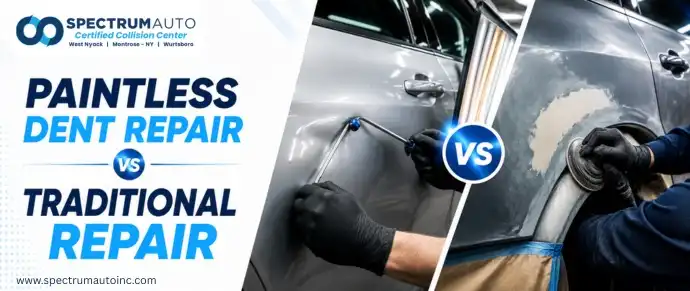
Paintless dent repair (PDR) removes dents by carefully reshaping the metal from behind the panel, without sanding, body filler, or repainting. A trained technician uses specialized rods and glue-pulling tools to massage the metal back to its original contour, while the factory paint stays completely untouched.
The method works because modern automotive paint is flexible enough to bend with the metal without cracking. When the finish has not been broken, PDR can often restore the panel to its original shape and appearance. Because it keeps the original factory paint, it also preserves the strongest, most color-accurate finish your vehicle will ever have.
PDR is a strong fit for shallow dents and dings, door dings from parking lots, and the small, rounded dents left by hail.
What is traditional auto body repair?
Traditional auto body repair is the fuller process most people picture when they imagine a body shop. It is used when the damage goes beyond what reshaping alone can fix. Depending on the vehicle, it can involve filling and sanding the damaged area, priming, and refinishing with color-matched paint. In more serious cases, technicians repair or replace entire panels and correct structural or frame damage.
This approach handles a much wider range of damage, from cracked paint and deep creases to the multi-panel damage that comes with a collision. It takes more time and materials, but it is the only way to properly restore a vehicle when the paint or structure has been compromised.
Paintless dent repair vs traditional repair: a side-by-side comparison
Here is how the two methods compare across the factors drivers care about most.
| Factor | Paintless dent repair (PDR) | Traditional auto body repair |
|---|---|---|
| Best for | Shallow dents, door dings, and hail damage with intact paint | Cracked paint, sharp creases, stretched metal, and collision damage |
| Paint | Original factory finish is preserved | Repainting and color matching are required |
| Process | Metal reshaped from behind the panel | Filler, sanding, priming, painting, and panel work as needed |
| Turnaround | Often quicker, sometimes completed in a single visit | Longer, depending on parts and paint |
| Typical cost | Usually lower, with no paint or parts | Usually higher |
| Resale value | Factory paint kept, which helps protect value | Depends on repair quality and color match |
What to expect during each repair
Knowing the steps ahead of time makes the process feel far less stressful. With paintless dent repair, a technician first inspects the dent under bright, angled lighting to confirm the paint and metal are suitable. They then gain access to the back of the panel, apply steady pressure to guide the metal back into shape, and refine the contour until the surface blends smoothly with the area around it. Because there is no filler or paint involved, the repair is often finished quickly.
Traditional auto body repair follows a longer path. The team assesses the damage and writes an estimate, then repairs or replaces the affected panels, applies filler where needed, and sands the area smooth. After priming, they apply color-matched paint and a clear coat, and finish with a quality inspection before the car is returned. Vehicles with advanced safety sensors may also need recalibration so those systems work correctly again.
When paintless dent repair is the right choice
Paintless dent repair is often the better option when the damage is cosmetic and the paint is still sound. Good candidates include:
- Round or shallow dents where the paint has not cracked or chipped
- Door dings and shopping-cart marks
- Hail damage across multiple small dents
- Minor creases where the metal has not been stretched
- Dents on panels a technician can reach from behind
In these situations, PDR is usually faster, more affordable, and gentler on your vehicle, because it avoids filler and repainting altogether.
When you need traditional auto body repair
Some damage is simply beyond the reach of reshaping, and forcing PDR onto the wrong dent produces a worse result than doing the job properly. Traditional auto body repair is the right call when:
- The paint is cracked, chipped, or deeply scratched
- The metal has a sharp crease or has been stretched by the impact
- A panel is on the edge or in a spot with no access from behind
- There is rust, or the panel has been repainted before
- The vehicle has structural, frame, or multi-panel collision damage
Paintless dent repair works only when the factory paint is intact and the metal has not been stretched or sharply creased. Once the paint is broken, traditional refinishing is needed to restore the surface.
— Collision repair industry guidance
Hail season and other common causes of dents
Dents rarely arrive at a convenient time. In New York, spring and summer storms can bring hail that leaves dozens of small dents across a hood, roof, and trunk in minutes. Because these dents are usually shallow and the paint often stays intact, hail damage is one of the most common reasons drivers turn to paintless dent repair. Parking-lot door dings, stray shopping carts, and minor low-speed bumps are other frequent causes that often qualify for PDR. Larger impacts and collisions, on the other hand, tend to damage the paint and structure, which points toward traditional repair.
How to tell which one your car needs
You can get a rough sense of the right method before you visit a shop. Run through this quick checklist:
- Check the paint. Run a finger lightly over the dent. If the paint is smooth and unbroken, PDR may be possible. If you feel or see cracks and chips, plan on traditional repair.
- Look at the shape. Soft, rounded dents suit PDR. Sharp lines and folds usually do not.
- Consider the location. Dents in the middle of a door, hood, or fender are easier to reach than those on edges or near reinforcements.
- Watch for warning signs. Fluid leaks, misaligned panels, or dents from a real collision point to deeper issues that need a full inspection.
Keep in mind that this is a guide, not a final diagnosis. Dent size alone does not decide the method; depth, sharpness, and paint condition do. A professional inspection under proper lighting is the only way to know for certain, which is why a careful shop will not promise a result from a phone photo alone.
What about cost, time, and insurance?
As a rule, paintless dent repair costs less and takes less time than traditional repair, because it skips paint, filler, and replacement parts. Traditional repair costs more because it involves more labor and materials. That said, we cannot give a firm price or timeline until a technician inspects the vehicle in person. Estimates can change if hidden damage is found once the work begins, and a trustworthy shop will explain any changes before moving ahead.
Insurers frequently favor paintless dent repair for hail damage because it restores the vehicle efficiently without diminishing its resale value.
— Auto insurance claims practice
If you are filing a claim, remember that in New York you have the right to choose where your car is repaired. Your insurer may suggest a shop, but the final decision is yours.
Why choose a certified auto body repair shop in New York
Whichever method your car needs, the quality of the repair depends on the skill and equipment behind it. A poor PDR attempt can leave high spots, and a rushed refinish can leave a color mismatch. Choosing a certified team protects both the look and the safety of your vehicle.
Spectrum Auto Inc. is an I-CAR Gold Class certified facility with I-CAR Platinum-certified technicians and 15+ Original Equipment Manufacturer (OEM) and specialty certifications. With more than 30 years of experience and over 1,000 Google five-star reviews, Spectrum Auto has become a trusted name for drivers across the Hudson Valley. In more than three decades of body repair work, our technicians have learned to spot the difference between a clean PDR job and a dent that needs full refinishing, often at a glance.
If you are searching for an auto body repair shop in West Nyack, or nearby in Montrose or Wurtsboro, our team can assess the damage honestly and recommend only the repair your car truly needs.
Frequently asked questions
Can a dent be fixed without repainting?
Often, yes. If the paint is intact and the metal is not stretched or sharply creased, paintless dent repair can reshape the panel while leaving the factory finish untouched. If the paint is cracked or chipped, repainting is usually required to restore the surface properly.
Is paintless dent repair cheaper than traditional body repair?
In most cases, yes. PDR skips paint, filler, and replacement parts, so it typically costs less and takes less time. The final figure still depends on the size, location, and number of dents, so an in-person estimate is the only way to know for sure.
Will paintless dent repair affect my car's resale value?
Done correctly, PDR helps protect resale value because it keeps the original factory paint. Preserving that finish matters, since it is the most durable and color-accurate paint the vehicle will ever have.
How long does dent repair take?
It depends on the method and the extent of the damage. A single dent handled with paintless dent repair can sometimes be completed in one visit. Traditional repair takes longer, since paint and any replacement parts need time, and a firm timeline is only possible after an in-person inspection.
Can paintless dent repair fix hail damage?
In most cases, yes. Hail usually leaves shallow dents without breaking the paint, which makes it a strong match for paintless dent repair. A technician will confirm during the assessment that each dent qualifies before starting.
The bottom line
Paintless dent repair and traditional auto body repair each have their place. PDR is ideal for shallow, cosmetic dents with intact paint, while traditional repair restores vehicles with cracked paint, stretched metal, or collision damage. The condition of the panel, not the size of the dent, decides which one your car needs.
If you are unsure, let a certified team take a look. Get an Online Estimate or Speak With a Repair Advisor at Spectrum Auto, and we will help you get back on the road with confidence.
This guide reflects the hands-on experience of the I-CAR Gold Class certified team at Spectrum Auto Inc., who have repaired dented and collision-damaged vehicles for New York drivers for more than 30 years.