When your car has a problem, the first question most people ask is: "How much is this going to cost?" But before you even get to the price, there is a more important question to answer — what kind of service does your car actually need?
Not every visit to a repair shop is the same. Some issues require a quick, targeted fix. Others call for a thorough inspection and a more complete approach. Understanding the difference can help you make smarter decisions, avoid overpaying, and ensure your vehicle gets exactly the care it needs.
What Are Basic Repairs?
Basic repairs are straightforward, single-issue fixes. They are typically done in response to a specific problem that has already shown up — something you can see, hear, or feel. These jobs are usually completed in a few hours and do not require an in-depth evaluation of the entire vehicle.
Common examples of basic repairs include:
- Replacing a flat or worn tire
- Swapping out a dead battery
- Changing wiper blades or bulbs
- Fixing a minor exhaust leak
- Topping up or replacing a single fluid (coolant, brake fluid, etc.)
- Replacing a blown fuse
Basic repairs are important and should not be skipped, but they are reactive by nature. You notice a problem, you get it fixed. There is no deeper investigation into whether other parts of the car may be contributing to the issue or heading toward failure.
What Are Full Auto Mechanic Services?
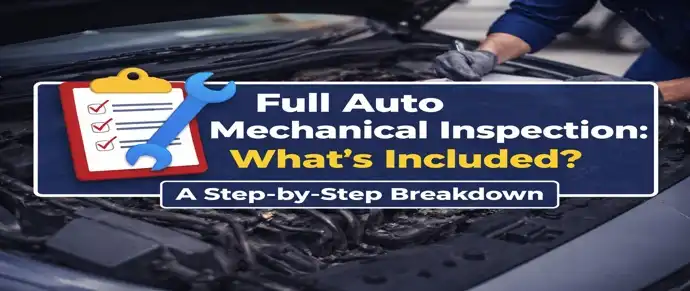
Full auto mechanic services go well beyond fixing what is visibly broken. A complete service involves trained technicians inspecting, testing, and maintaining multiple systems across your vehicle — not just the one thing you came in for.
This type of service is both preventive and corrective. It addresses what is wrong today and also identifies what may become a problem down the road. A proper full-service visit at a certified mechanical repair shop typically covers:
- Engine diagnostics — reading error codes and evaluating engine performance
- Brake system inspection — checking pad thickness, rotor condition, and brake fluid
- Suspension and steering check — identifying worn shocks, tie rods, and alignment issues
- Transmission service — fluid check, filter replacement, and performance evaluation
- Cooling system inspection — testing the radiator, thermostat, and hoses
- Electrical system check — battery health, alternator output, and wiring condition
- Exhaust and emission testing — ensuring the system is functioning within safe limits
- Tire pressure and tread depth check — including spare tire condition
The goal of full auto mechanical repair services is to give your car a complete evaluation, not just a surface-level patch. It is the difference between treating a symptom and understanding the full picture of your vehicle's health.
Key Differences at a Glance
Here is a simple breakdown of how the two compare:
- Scope: Basic repairs target one specific issue. Full services cover the entire vehicle.
- Purpose: Basic repairs are reactive. Full services are both preventive and corrective.
- Time: Basic repairs take a few hours. Full services may require a full day or more depending on findings.
- Cost: Basic repairs have a lower upfront cost. Full services cost more initially but save money long-term.
- Outcome: Basic repairs fix what is broken. Full services ensure everything is working as it should.
When Should You Choose One Over the Other?
This depends on the age of your vehicle, how long since your last inspection, and the nature of the issue you are experiencing.
You are likely fine with a basic repair if:
- Your car is relatively new and well-maintained
- You recently had a full inspection and only one new issue has come up
- The problem is clearly isolated — a flat tire, a dead battery, a broken light
You should consider full auto mechanical repair services if:
- Your car has not been properly inspected in over a year
- You are experiencing multiple symptoms at the same time
- You recently bought a used vehicle and do not know its full service history
- Your car has high mileage and you want to stay ahead of potential failures
- You are planning a long road trip and want peace of mind
Why It Matters to Get This Right
Choosing basic repairs when your car actually needs a full service is one of the most common mistakes vehicle owners make. You might fix the brake pads today, only to find out a month later that the rotor was also damaged — and now the repair costs twice as much.
A certified mechanical repair shop will always be honest with you about what your car needs. A good technician does not push unnecessary services, but they will flag anything that needs attention so you can make an informed decision.
At Spectrum Auto Inc., we take a thorough approach to every vehicle that comes through our doors. Whether you need a quick repair or a complete service, our I-CAR Platinum certified team gives you a clear, honest assessment and the quality workmanship to back it up.
Frequently Asked Questions
Q1: Is a full vehicle service necessary if my car seems to be running fine?
Yes, and this is one of the most common misconceptions in car ownership. Many mechanical problems develop silently over time and do not produce obvious symptoms until they reach a critical stage. A full service allows your technician to catch issues like fluid leaks, worn belts, or early-stage brake deterioration before they become expensive or dangerous. Think of it the same way you would a routine health check — you do not wait until something hurts to see a doctor.
Q2: How do I know if a repair shop is recommending services I actually need?
A trustworthy repair shop will always show you the problem before fixing it — whether that is a worn part, a diagnostic reading, or photographic evidence. They will explain the issue in plain language and give you a clear estimate before any work begins. If a shop cannot explain why a service is needed or pressures you into approving work without explanation, that is a red flag. Look for certified shops with verified reviews and transparent processes.
Q3: How often should I schedule a full vehicle inspection?
For most vehicles, once a year is the recommended minimum. However, if you drive frequently, cover long distances, or own a vehicle with over 75,000 miles, twice a year is a better standard. High-mileage vehicles and older cars benefit the most from regular full-service visits, as more components are approaching the end of their service life at the same time.