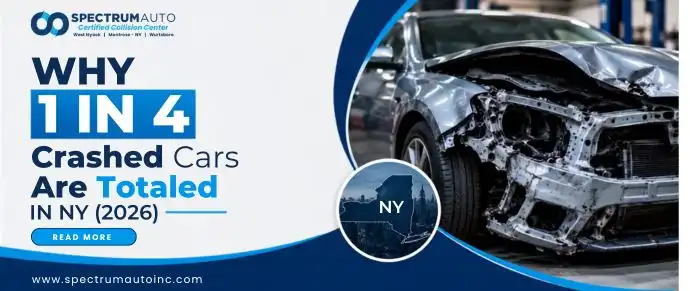
Getting into a car accident is stressful enough without hearing that your vehicle may be declared a total loss. Yet this situation is becoming more common across the United States. According to recent insurance and collision repair trends, approximately one in four damaged vehicles is now considered a total loss rather than being repaired.
For New York drivers, this shift can be confusing. A vehicle may appear repairable on the outside but still receive a total-loss assessment after a detailed inspection. That's because insurers evaluate much more than visible accident damage. Repair costs, vehicle value, structural integrity, and safety all play important roles in the decision.
Understanding how the process works can help you make informed decisions after an accident and better communicate with your insurance provider and repair facility.
What Does "Totaled" Actually Mean?
A totaled vehicle, also known as a total loss vehicle, is one that an insurance company determines is not economically practical or safe to repair.
This does not necessarily mean the vehicle is beyond repair. Instead, it usually means that repairing it would cost close to or more than its actual cash value before the accident.
Insurance companies generally evaluate several factors, including:
- Current market value of the vehicle
- Estimated repair costs
- Potential hidden structural damage
- Salvage value after the accident
- State regulations regarding total-loss thresholds
For example, a newer vehicle with minor damage may be repaired, while an older vehicle with similar damage could be declared a total loss because its market value is much lower.
The key difference is that repairable damage can often be restored safely, while a total-loss decision is based largely on financial and safety considerations.
Why More Vehicles Are Being Declared Total Losses
Several factors have contributed to the increase in total-loss decisions over the past few years.
Rising Repair Costs
Vehicle repairs have become significantly more expensive due to higher labor rates and increased material costs. Even moderate collision repair work can quickly add up.
Advanced Vehicle Technology
Modern vehicles contain cameras, sensors, radar systems, and driver-assistance features that often require recalibration or replacement after an accident. Damage that once involved replacing a bumper may now include expensive electronic components.
Higher Replacement Part Costs
Original equipment manufacturer (OEM) parts often cost more than they did just a few years ago. Specialty components and limited availability can further increase repair expenses.
Labor Shortages
Many collision centers continue to experience shortages of skilled technicians, affecting labor costs and repair timelines.
Inflation
General inflation has increased the cost of:
- Paint materials
- Replacement parts
- Shop supplies
- Equipment maintenance
- Technician wages
Supply Chain Delays
Longer wait times for replacement parts can increase rental vehicle expenses and overall insurance claim costs, making replacement a more practical option in some cases.
How Insurance Companies Decide Between Repair and Replacement
Every insurance claim is unique, but adjusters typically evaluate several important factors before making a decision.
Vehicle Market Value
The insurer determines what the vehicle was worth immediately before the accident.
Estimated Repair Costs
A professional repair estimate identifies the cost of parts, labor, paint work, calibrations, and additional repairs that may become necessary during disassembly.
Structural Damage
Damage affecting the frame or major structural components often requires specialized repairs. While frame damage does not automatically mean a vehicle is totaled, extensive structural repairs may increase costs significantly.
Vehicle Safety
Insurers consider whether the vehicle can be restored to manufacturer safety standards.
Airbag Deployment
Multiple deployed airbags can substantially increase repair expenses because replacing airbags often involves sensors, modules, and interior components.
Each of these elements contributes to the insurer's decision regarding repair vs replacement.
What NY Drivers Should Do After an Accident
Knowing the proper steps can make the insurance process much smoother.
1. Ensure Everyone's Safety
Check for injuries, move to a safe location if possible, and contact emergency services when necessary.
2. Document the Damage
Take clear photographs of:
- Vehicle damage
- License plates
- Road conditions
- Traffic signs
- The accident scene
These images can support your insurance claim.
3. Contact Your Insurance Provider
Report the accident promptly and provide accurate information about what occurred.
4. Obtain a Professional Damage Assessment
Visible damage rarely tells the whole story. A qualified Autobody repair shop in NY can perform a detailed inspection that identifies hidden damage affecting both repair costs and vehicle safety.
5. Understand Your Repair Options
Before accepting a total-loss decision, ask questions about:
- The repair estimate
- Vehicle appraisal
- Structural findings
- Available repair options
Being informed helps you understand how the decision was made.
Can a Vehicle Still Be Safely Repaired?
Yes—many vehicles involved in collisions can be safely repaired when proper repair procedures are followed.
Professional collision repair facilities use manufacturer-approved methods to restore vehicles to safe operating condition whenever appropriate.
This typically includes:
- Comprehensive structural inspections
- OEM repair procedures
- Precision frame measurements
- Replacement of damaged safety components
- Electronic system calibration
- Thorough quality control inspections
Experienced technicians also verify that steering, suspension, braking systems, and advanced driver-assistance features operate correctly before returning the vehicle to the owner.
Choosing an experienced Autobody repair shop in NY helps ensure repairs meet recognized safety and quality standards.
Understanding Your Rights During the Insurance Process
Many drivers assume they have little control after filing an insurance claim, but that's not always the case.
You have the right to:
- Choose your preferred repair facility in many situations.
- Review the repair estimate carefully.
- Ask your insurance adjuster to explain the total-loss calculation.
- Request clarification regarding vehicle appraisal methods.
- Seek a second opinion if you believe additional information should be considered.
If you have concerns about the assessment, discussing them with both your insurer and your repair facility can provide valuable clarity.
Common Myths About Totaled Vehicles
Several misconceptions create unnecessary confusion during the claims process.
Myth: A totaled car is always impossible to repair.
Fact: Many vehicles can technically be repaired. A total-loss decision often reflects repair costs compared to vehicle value rather than repairability alone.
Myth: Cosmetic damage alone can total a vehicle.
Fact: Cosmetic damage by itself rarely results in a total loss. Hidden structural damage, repair expenses, and vehicle value are usually much larger factors.
Myth: Insurance companies always choose the cheapest option.
Fact: Safety, repair quality, state regulations, and financial considerations all influence the final decision.
Myth: Older vehicles are automatically considered total losses.
Fact: Age alone is not the deciding factor. Vehicle condition, market value, and repair costs all matter.
Myth: Drivers cannot question a total-loss decision.
Fact: You can ask for explanations, review the appraisal, and request additional information if you have concerns.
How to Reduce the Risk of a Total Loss
While no one can prevent every accident, these steps may improve your vehicle's repair prospects.
- Address collision damage promptly before it worsens.
- Keep your vehicle properly maintained.
- Carry insurance coverage that matches your needs.
- Choose experienced repair professionals for inspections and repairs.
- Review your insurance policy before an accident occurs so you understand your coverage.
Conclusion
As repair costs continue to rise and modern vehicles become more technologically advanced, insurance companies are declaring more damaged vehicles as total losses than ever before. However, a total-loss assessment is not based solely on how a vehicle looks after an accident. Vehicle value, repair expenses, structural condition, and safety all contribute to the decision.
If your vehicle has been involved in a collision, obtaining a professional damage assessment is one of the most important steps you can take before assuming it cannot be repaired.
Spectrum Auto Inc. helps New York drivers understand the full extent of collision damage through detailed inspections, accurate repair estimates, and clear communication throughout the insurance process. When repairs are appropriate, their experienced technicians follow manufacturer-recommended procedures and place vehicle safety at the center of every repair.
If your vehicle has been involved in an accident, contact Spectrum Auto Inc. to schedule a professional damage assessment or repair estimate and make informed decisions about your next steps.
Frequently Asked Questions
1. What percentage of a vehicle's value determines a total loss?
The percentage varies depending on state regulations and insurance policies. Insurers generally compare the estimated repair costs and related expenses to the vehicle's actual cash value before the accident.
2. Can I keep my car if the insurance company declares it totaled?
In many cases, yes. Depending on your insurer and state requirements, you may be able to retain the vehicle, although it may receive a salvage title and require inspections before returning to the road.
3. Can a totaled vehicle be repaired and driven again?
Yes, in some situations. If state requirements are met and the necessary repairs are completed successfully, a previously totaled vehicle may be legally driven again after passing any required inspections.
4. How long does the total-loss process usually take?
The timeline depends on factors such as vehicle inspections, insurance evaluations, repair estimates, and documentation. Many claims are resolved within several days to a few weeks.
5. Should I get a second repair estimate before accepting a total-loss decision?
A second professional assessment can be helpful if you have questions about the damage or repair costs. It may provide additional information that helps you better understand your options and the insurer's decision.